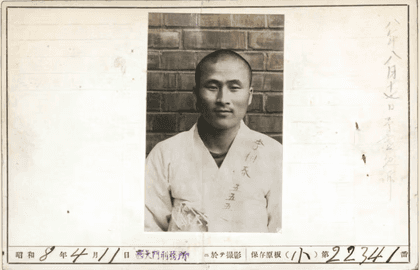
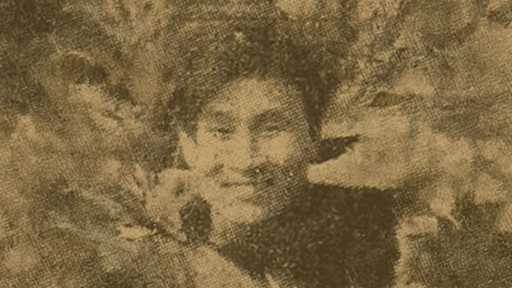
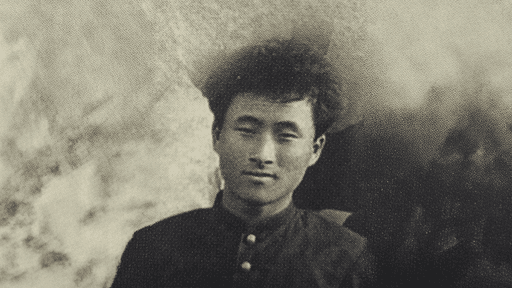
Who is Ri Sangchun?
Ri Sangchun was an ill-fated avant-garde artist who was born in Namyonggangjeong (now Gongpyeong-dong), Daegu, on September 25, 1910, shortly after the beginning of the Japanese occupation, and who fought for national and class liberation through the medium of art. After being imprisoned several times due to Japanese repression and while thereafter battling with illness, he died on November 13, 1937, in Donamjeong (now Donam-dong), Gyeongseong, at the age of 27, thus never living in his own homeland.
What kind of artist was Ri?
During the Japanese colonial period, there were generally two types of artists: modernist artists who used art as an escape from the colonial reality and pursued aesthetic values, and avant-garde artists who asked “What is art?” and tried to confront and overcome the contradictions of the colonial reality of the time. Ri Sangchun stood out among the latter, but his existence and artistic achievements have been forgotten due to at once political and art-historical trends or conditions distorted by the division of North and South Korea and anti-communist ideology since the liberation of Korea in 1945.
As an avant-garde artist affiliated with the KAPF (Korea Artista Proleta Federacio), Ri Sangchun utilized a variety of media to communicate with colonized peoples, including printmaking, illustration, posters, photomontage, magazine publishing, graphic design, street theater, stage setting, drama theory and criticism, and education, and moved freely between the cutting-edge avant-garde styles of his time, including Dadaism, Futurism, Surrealism, Russian Constructivism, and even Realism, to embody his social ideals.
Although Ri Sangchun was active in the avant-garde art movement, organizing the ‘Zero Gwahoe’ exhibition, publishing the Theater Movement, and leading the theater companies ‘Daegu Street Theater,’ ‘Megaphone,’ and ‘New Construction,’ he was always under surveillance or wanted by the Japanese police, and most of his works and records were lost due to his repeated arrests and prolonged imprisonment. However, it would be unfair to treat his passionate life and artistic activities as if they had never existed.
Why Ri Sangchun Now?
Ri Sangchun is of pivotal significance in the “here and now” because, on the one hand, his avant-garde artistic practice is central to expanding and reshaping the modernism-centered horizons of Korean-Daegu modern art while strengthening the impoverished roots of Korean-Daegu contemporary art, and, on the other hand, his avant-garde artistic spirit is particularly central to developing local contemporary art and thereby transforming the region’s longstanding political, social, and cultural stagnation.
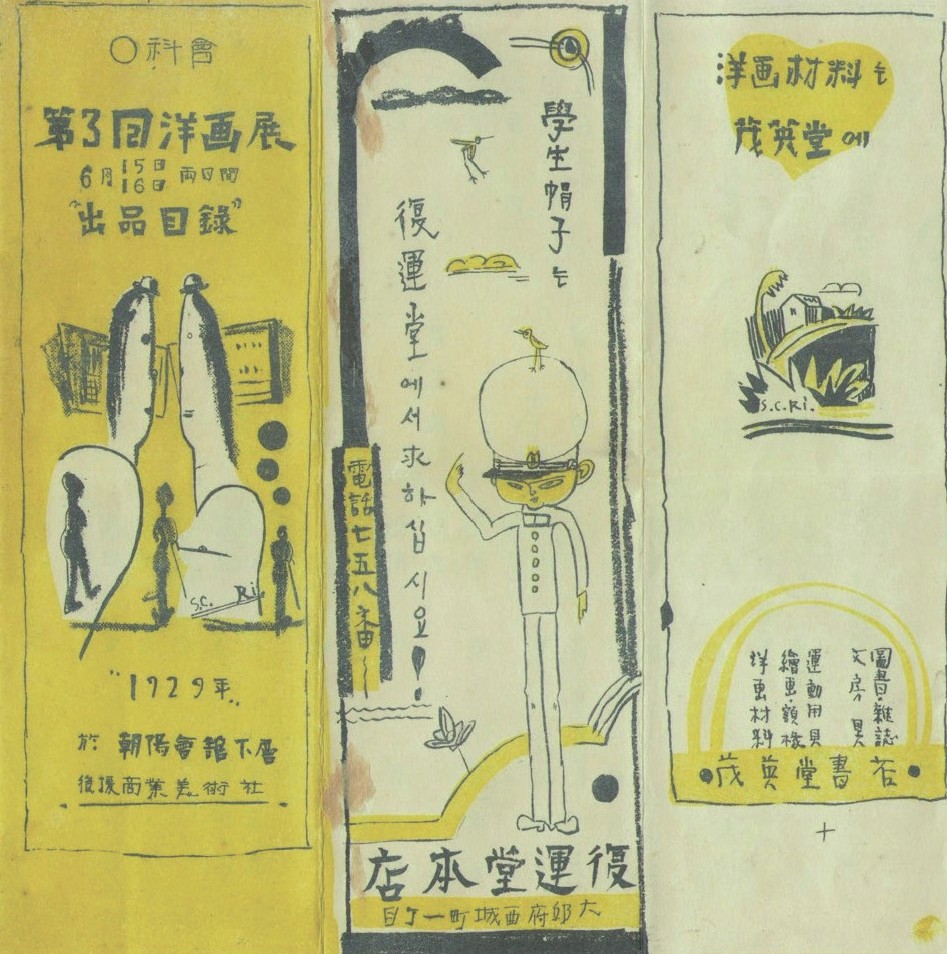
The Time and Art of Ri Sangchun
In what time did Ri Sangchun live? Who was he? And what kind of artist was he? Why did he have to be forgotten for so long, and why do we need to revive him and shed new light on him now? Born in 1910, at the beginning year of the Japanese occupation, Ri Sangchun experienced the March 1 Movement during his time at Daegu Primary School, and while he was immersed in painting as an adolescent, he began to open his eyes to the colonial reality through his activities in the Labor Boys’ Association and similar Associations. He was an avant-garde artist who was absorbed in art enough to leave Daegu Commercial School, but sought the contemporary role of art in the colonial reality that he and his people faced at the time.
Then, what about the situation of Korean art during the Japanese occupation that Ri Sangchun faced? The art world at the time was closely linked to the situation of Japanese art, as colonial Korean artists had generally adopted advanced art from their colonial home country. At the time, Japan was adopting various Western avant-garde styles as quickly as it had just like during the Meiji Restoration. In fact, in the 1920s and 1930s, all kinds of advanced Western art such avantgarde art as Dadaism, Futurism, Surrealism, and Russian Constructivism, not to mention formalist modern art, were widely spread in Japan through the emerging art organizations ‘Samgwa (三科)’, ‘MAVO’, ‘Johyeon (造型).’
However, in the history of Korean modern art, did there exist only pure art such as Academic or early Modern art like Impressionism that the Japanese Government-General of Joseon allowed at the ‘Joseon Art Exhibition(朝鮮美術展覽會)’ as part of Cultural Rule? Were there no avant-garde artists like the West or Japan who resisted imperialism and fought for an alternative utopian society? It did exist, but unfortunately it was only forgotten. For example, Ri Sangchun was an avant-garde artist belonging to KAPF who freely utilized the cutting-edge styles of the time such as Dadaism, Surrealism, Realism, and Russian constructivism and spearheaded the liberation of the nation and class from Japanese colonialism and capitalist systems.
However, Ri Sangchun, along with most of the KAPF artists, has disappeared from the mainstream history of Korean modern art, not only because of the lack of extant works, but also because of the hegemony of the formalist modernists who survived by conforming to the Japanese Cultural Rule, and then gained the upper hand after the liberation of Korea, as well as the division of North and South Korea and the continuation of McCarthyism. However, in the context of the art historical transition from modern art to contemporary art, we are paradoxically living in an era where avant-garde artists such as Ri Sangchun are being actively rediscovered as the historical roots of contemporary art around the world.